Free UK Delivery 1 Day Dispatch 100+ Designs Custom Design Service
Toggle Nav

How to Apply Wall Stickers
Thank you for purchasing from Wall Designer. Our vinyl wall stickers are easy to apply when you follow these simple steps. Please read through the full guide before you start.
Before You Start
- You cannot reposition vinyl after the backing paper is removed — plan your placement carefully first.
- Stickers are not reusable. They can be removed but may be damaged in the process.
- When removing vinyl from painted walls, use a hairdryer to soften the adhesive and avoid paint damage.
- Do not apply to wallpaper — the adhesive may lift it when you remove the sticker.
What You'll Need
Squeegee or credit card
Masking tape
Isopropyl alcohol & cloth
Pencil & spirit level (optional)
Hairdryer (optional)
Step-by-Step Instructions
-
 1
1Prepare Your Surface
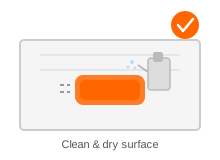
Clean the surface thoroughly with isopropyl alcohol (avoid ammonia-based cleaners) and allow it to dry completely. Remove all dust, grease and grit — even a small particle can prevent the vinyl from adhering.
Newly painted walls must be left for at least 2 weeks before applying stickers, as fresh paint continues to off-gas and will reduce adhesion.
Surface guide: Works best on smooth painted walls, glass, tiles and most hard flat surfaces. Avoid wallpaper, rough brick, unsealed wood and heavily textured walls. -
 2
2Check Temperature & Conditions
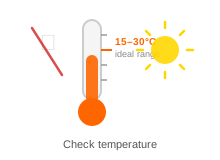
Apply in temperatures between 15°C and 30°C (59–86°F). Cold conditions make vinyl stiff and difficult to work with; high humidity prevents proper adhesion.
Avoid applying in direct sunlight or immediately after the room has been heated — the surface should be at room temperature.
Tip: If your sticker has been stored in a cold garage or car, bring it indoors for a few hours before applying. -
 3
3Loosen the Backing Paper
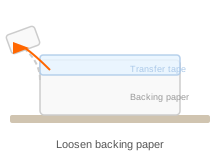
Lay the sticker face down on a clean flat surface (backing paper on top). Gently peel the backing paper halfway back, making sure the vinyl stays on the transfer tape. Re-apply the paper, then repeat from the other side.
This loosening step ensures the backing separates cleanly when you come to apply the sticker to the wall.
If vinyl sticks to the backing: Smooth the paper back onto the transfer film, press firmly, and try again more slowly. -
 4
4Cut Elements Apart & Plan Your Layout
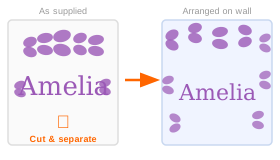
Important — please read before applying: Some designs are supplied as a set where individual decorative elements (such as butterflies, hearts or stars) are nested close together on a single sheet. This is intentional — we pack them tightly to minimise material waste and keep costs down for you.
These elements are not meant to be applied as a group. You should cut each one individually from the sheet with scissors and arrange them spread out across your wall to achieve the intended effect. Applying the sheet as-is will result in the elements clustered tightly together rather than the spread-out look shown in the product images.
✂ How to tell if your design needs assembly: Check the info label on your sheet, or compare your sheet to the product listing photos. If the decorative elements appear packed tightly together on the sheet but spread apart in the product photo — cut them out and arrange individually.Once elements are cut, use masking tape to experiment with placement on the wall before committing. Step back and assess the arrangement. A spirit level helps keep the main design straight.
Large designs: Split into sections and apply one at a time — much easier to manage. -
 5
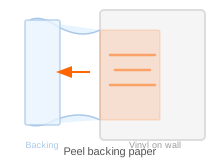
5Peel the Backing Paper
Once you are happy with the position, carefully peel back the backing paper while pressing the vinyl to the wall with your other hand. Keep the backing paper close and parallel to the surface as you peel — this reduces the risk of the vinyl lifting.
Check constantly that the vinyl is staying on the transfer tape and not coming away with the backing. If it does, press back and retry.
-
 6
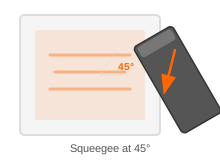
6Apply with Squeegee
Using your squeegee (or a credit card), press the vinyl firmly onto the surface working from the centre outward, holding the tool at approximately 45 degrees. Use smooth, firm strokes — do not rush this step.
Keep the unapplied portion of the sticker away from the wall as you work to prevent unwanted contact.
Air bubbles: Work them toward the edges as you go. Very small bubbles left after application often disappear on their own within 2–4 weeks. For persistent bubbles, use a pin to make a tiny hole and press flat. -
 7
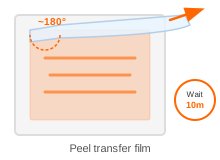
7Remove Transfer Film
Wait at least 10 minutes after applying before removing the transfer film. Peel it back slowly, pulling the tape back parallel to the surface (almost flat) rather than pulling outward at a right angle.
If the vinyl begins to lift with the transfer film, stop, press back down firmly with the squeegee, and try again more slowly.
Do not leave transfer tape on painted walls for more than a few hours — it can damage fresh paintwork when removed. -
 8
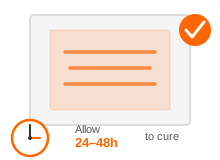
8Allow to Cure
The adhesive reaches full strength after 24–48 hours. During this period, avoid cleaning the surface around the sticker or applying pressure to it.
After curing, periodically press down any loose edges with a squeegee or your fingernail to keep the sticker looking its best.
Well done! Your sticker is now applied. If you have any questions, contact us at sales@walldesigner.co.uk
Handy Hints & Special Surfaces
- Glass application: Spray the glass with a diluted soap solution (one drop of washing-up liquid in a cup of water) before applying. This gives you time to reposition and helps eliminate bubbles. Allow to dry completely before removing the transfer film.
- Tiles: Works on smooth gloss tiles. Grout lines may cause edges to lift over time — press firmly over grout areas and check periodically.
- Textured walls: Light orange-peel texture is usually fine with extra squeegee pressure. Deep or heavily textured walls are not recommended as adhesion will be unreliable.
- Crease in your vinyl? Vinyl is elastic — gently warm the area with a hairdryer and smooth with the squeegee. Most creases from courier handling disappear quickly.
- Removing your sticker: Warm the vinyl with a hairdryer to soften the adhesive, then peel slowly from one corner. Take particular care on painted walls to avoid lifting paint.
- Take your time. The most common mistake is rushing — especially during the squeegee and transfer film removal stages. A slow, careful application always gives the best result.